

Eating well somewhere unfamiliar is mostly a research problem, and the research most people do – searching the city name plus “best restaurants” – returns the places that are best at being findable. Those are not the same thing.
Here is the process we use before a trip. It takes about an hour per destination and it changes the food substantially.
Start with what the place actually grows and catches
Before any restaurant list, find out what the region produces. Coastal or inland. What grain is the staple. What the fat is – mustard oil, coconut, ghee, olive. What is in season in the month you are going.
This one step reorganises everything. It tells you that ordering seafood two hundred kilometres inland is a choice, that the local sweet is made with whatever milk or grain is abundant, and that half the dishes on a tourist-facing menu are there for tourists.
It also gives you something to ask people about, which is the actual unlock.
Find the meal structure, not just the dishes
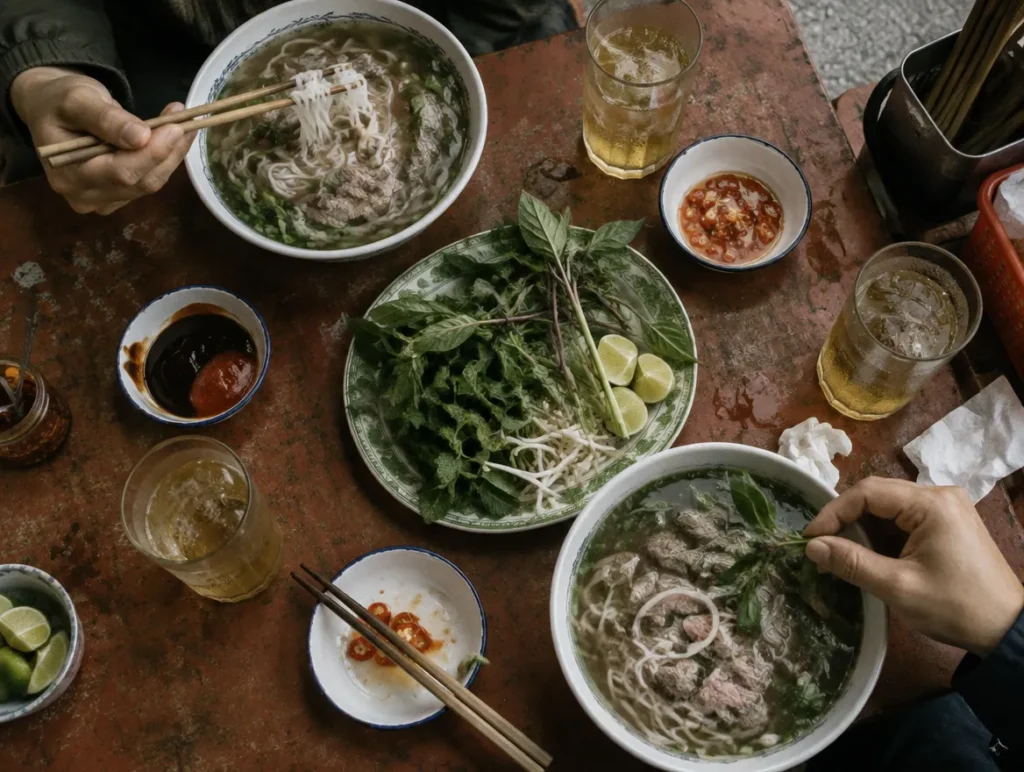
Most cuisines have a rhythm: what is eaten at what time, and what is never eaten then. Breakfast in much of south India is a distinct category of food that is not served at dinner. Spanish eating hours will strand you if you arrive at a restaurant at seven. In much of Vietnam the best version of the national breakfast dish is sold out by mid-morning.
Getting the timing right matters more than getting the venue right. A mediocre place at the correct hour beats the celebrated place at the wrong one.
Sources, in the order we trust them
Local-language food writing and local publications. Run it through a translator. This is where you find the places that have no reason to market to visitors.
People who live there, asked a specific question. “Where should I eat?” gets you a polite tourist answer. “Where do you eat on a weekday when you cannot be bothered to cook?” gets you something real. So does asking about a specific dish rather than a category.
Market vendors. The people selling produce know who cooks well, and they have no stake in where you go.
Reviews, read against the grain. The rating is close to useless. The photographs are not, and the negative reviews are the most informative part: complaints about slow service and no English menu are frequently a good sign, while complaints about inconsistency are not.
Video, cautiously. Short-form food content is heavily driven by what looks dramatic and by paid placement. Useful for seeing a dish and a neighbourhood; unreliable as a recommendation.
The signals that hold up almost anywhere
- A short menu. Six things means they make six things. Eleven pages means a freezer.
- A crowd that matches the neighbourhood. Full of locals at a local hour is the strongest single signal there is.
- Turnover on the thing you want. For anything fried, grilled or steamed to order, watching it being made is worth more than any review.
- One thing done repeatedly. Specialists beat generalists nearly everywhere in the world.
- A queue of people who are not photographing the queue.
Build a list with geography attached
Save places to a map, not to a notes file. Tag each one with the meal it is for and the hours it keeps.
The reason is practical: you will not walk forty minutes for lunch. You will eat within about ten minutes of wherever you happen to be at the moment you get hungry. A map means that when that moment arrives, there is something good within ten minutes. A list means you look at it, realise everything is across town, and eat at the nearest place with pictures on the menu.
Aim for a handful of options in each area you will actually be in, not a ranked top ten in one neighbourhood.
Leave room to be wrong
Book one or two things if they genuinely need booking. Leave the rest open.
The best meals on most trips are not on the list. They are the place you walked past that smelled right, or the thing someone insisted you try. A fully booked food itinerary removes the capacity to act on that, which is the main advantage of having done the research in the first place: you know enough to recognise a good sign when you see one.
Dietary requirements, handled properly
If you have a restriction, write it out in the local language before you go, specifically and in food terms rather than category terms. “No meat” is understood very differently across countries; listing the actual items, including stocks and fats, avoids most of the misunderstandings.
For allergies, carry a written card rather than relying on a translation app at a noisy counter. And learn to recognise the word for your allergen written down.
The hour, summarised
Twenty minutes on what the region produces and when it is eaten. Twenty minutes in local-language sources. Twenty minutes dropping pins on a map. Then stop researching and go.